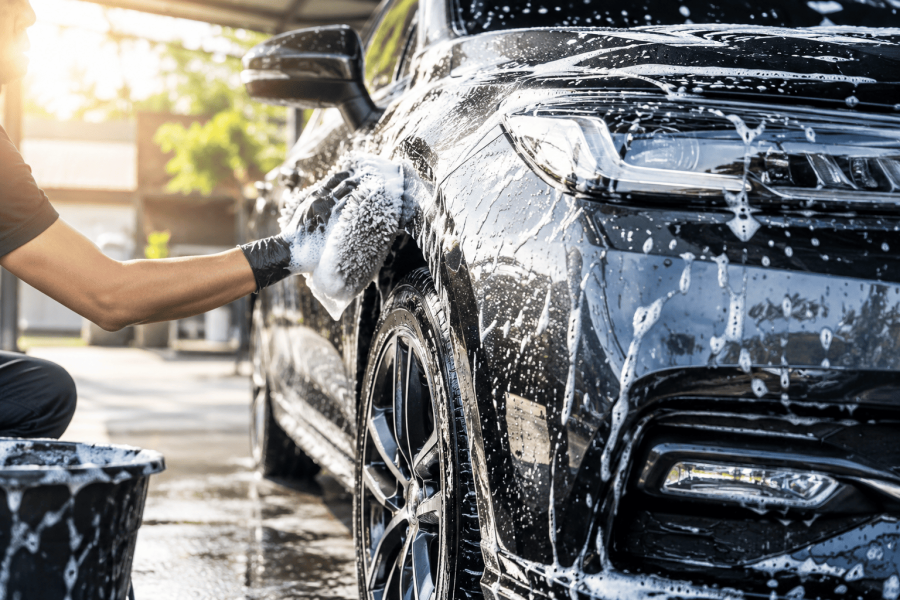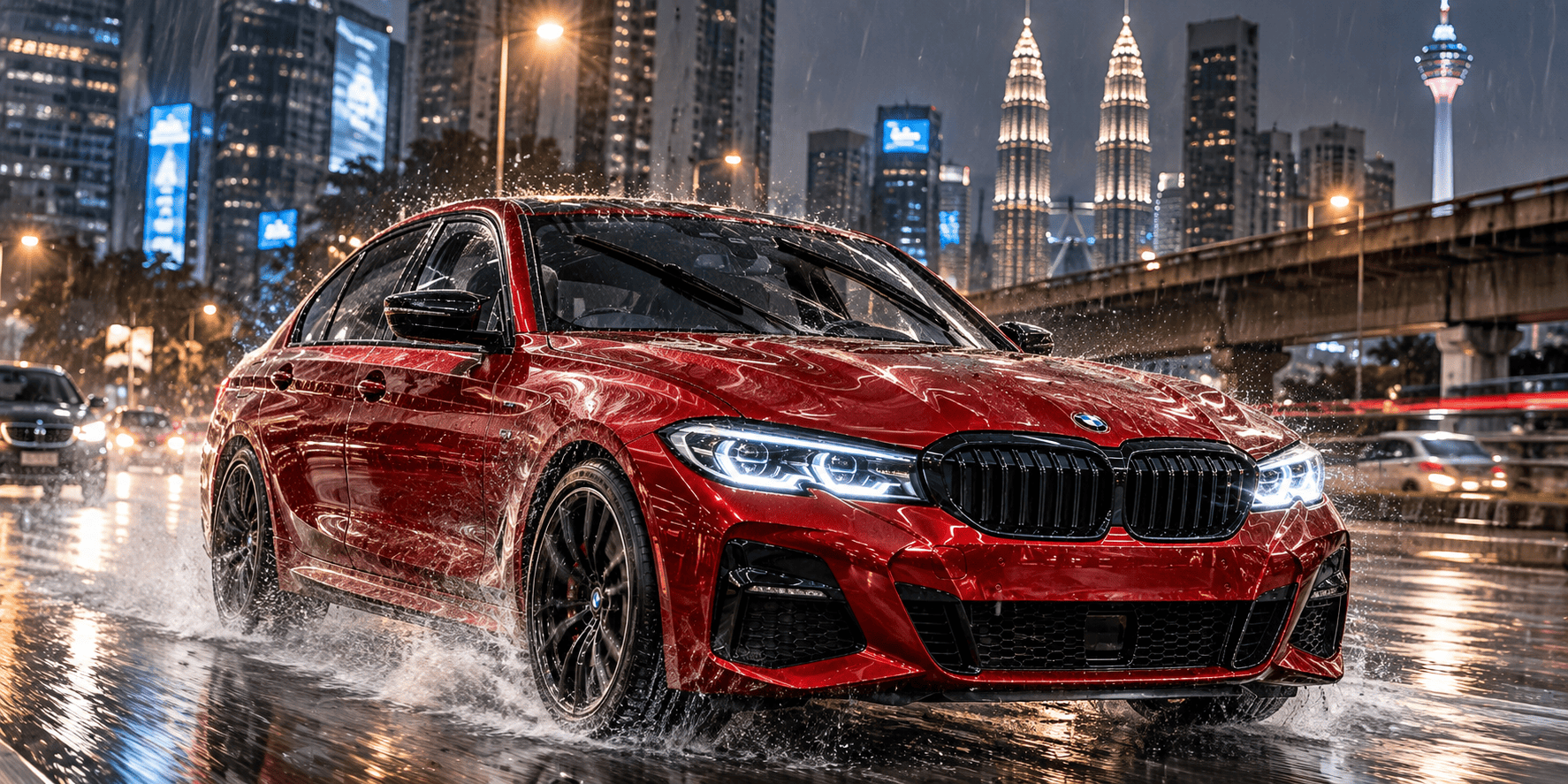
Unfortunately, rain doesn’t work quite like a car wash.
Rainwater can pick up dust, pollutants, minerals, and other particles from the atmosphere before landing on your vehicle. When the water eventually evaporates, some of those contaminants can remain on the surface.
For drivers in Kuala Lumpur and other tropical environments, understanding how rain interacts with automotive paint can help make exterior maintenance more effective.
Is Rainwater Bad for Your Car?
Rain itself is not necessarily harmful to automotive paint.
The bigger concern is what is left behind after the rain dries.
A vehicle parked outdoors can collect a mixture of:
- Dust
- Airborne pollutants
- Mineral deposits
- Dirt
- Pollen
- Industrial particles
- Bird droppings
- Tree sap
When rain falls onto these contaminants, they can become distributed across the vehicle’s exterior.
Once the water evaporates, the remaining particles can become more noticeable.
Why Do Water Spots Appear After Rain?
One of the most common issues following rainfall is the appearance of water spots.
A water spot forms when water containing dissolved minerals or contaminants dries on a surface.
Instead of the water remaining on the paint, the liquid evaporates and leaves behind its mineral content.
You may notice these marks particularly on:
- The bonnet
- Roof
- Boot lid
- Side windows
- Mirrors
- Dark-colored paint
Dark vehicles can make water spots especially easy to see because the contrast between the paint and mineral deposits is greater.
How Kuala Lumpur Weather Can Affect Your Car
Tropical weather creates an interesting combination for vehicle owners.
A typical day can involve:
Strong sunlight → high temperatures → sudden rain → wet surfaces → rapid drying
This repeated cycle can cause contaminants to remain on the vehicle between periods of rain and sunshine.
Urban driving can add another layer of contamination because vehicles are exposed to traffic emissions, road dust, and other airborne particles.
That means rainfall should not be considered a substitute for proper vehicle cleaning.
What Happens When Rainwater Dries on a Dirty Car?
Imagine a vehicle that already has a thin layer of dust on its paint.
Rain falls on the vehicle and mixes with the dust.
The vehicle then remains outside until the sun comes out.
As the water evaporates, some of the dirt and minerals remain behind.
The result can be:
Dust + rainwater + drying = visible residue
Repeated exposure can make the vehicle increasingly difficult to keep looking clean.
This is particularly noticeable on vehicles with glossy black, dark blue, red, or other darker finishes.
Should You Wash Your Car After Rain?
Not necessarily after every rainfall.
The more important question is what condition the vehicle is in after the rain.
If the car remains relatively clean and there is little visible residue, there may be no immediate need for a full wash.
However, if you notice:
- Water spots
- Mud
- Road grime
- Dust deposits
- Bird droppings
- Tree sap
- Dirty wheels
- Contaminated lower panels
then proper cleaning becomes more worthwhile.
The key is to avoid treating rainfall as the cleaning process itself.
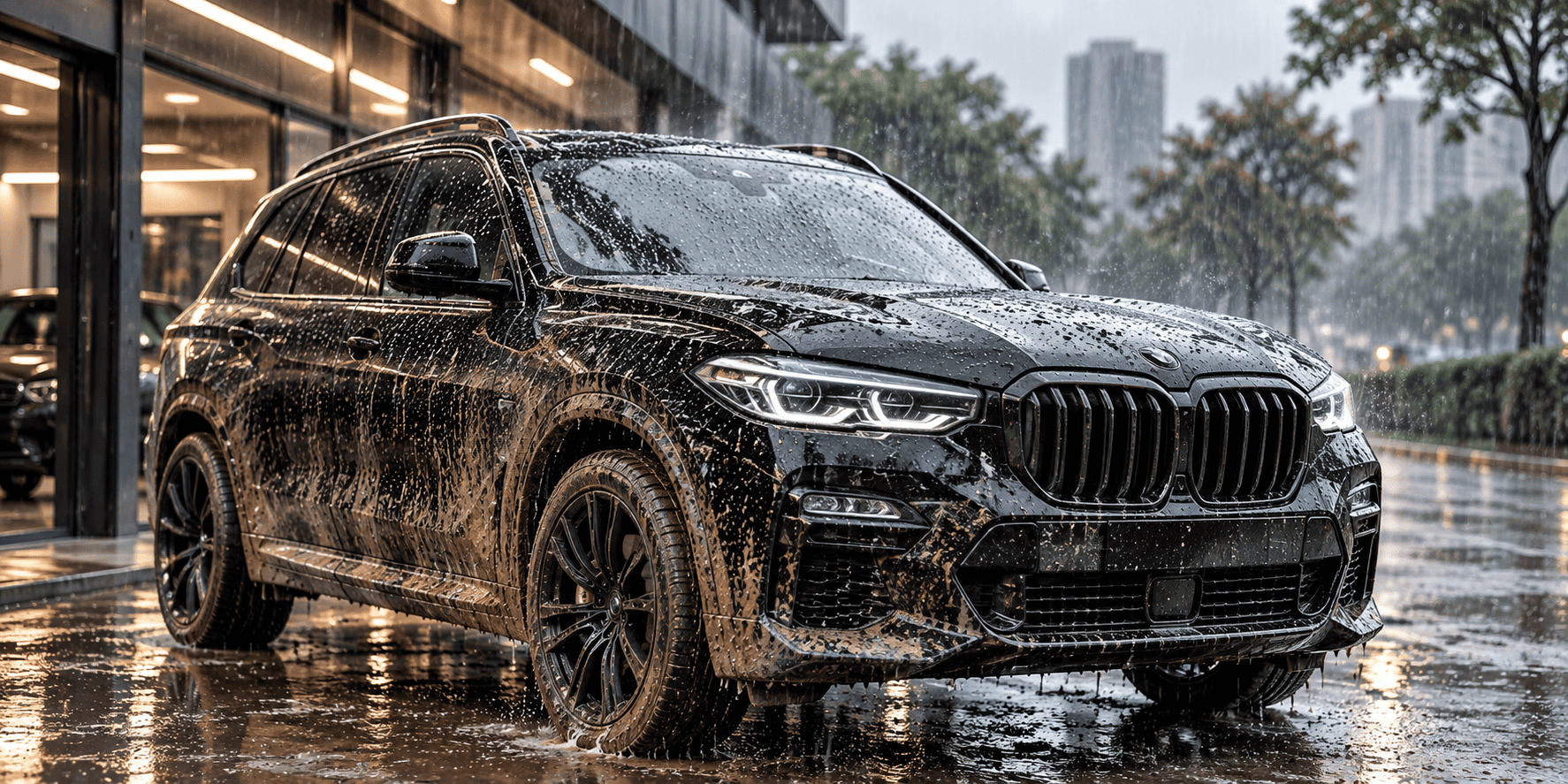 Don’t Wipe a Dusty, Wet Car Immediately
One common mistake is wiping the vehicle with a towel immediately after rain while dirt and particles are still sitting on the paint.
Dragging loose contamination across the surface can potentially create fine marks.
Instead, the vehicle should be cleaned using an appropriate automotive washing process.
A proper wash is designed to loosen and remove contamination rather than simply move it around the surface.
What About Bird Droppings During Rainy Weather?
Rain doesn’t necessarily remove bird droppings completely.
In fact, moisture can spread the contamination across a larger area of the vehicle.
Bird droppings are best dealt with promptly rather than allowing them to remain on the paint until the next scheduled wash.
The same principle applies to tree sap and insect residue.
If you see a stubborn contaminant, don’t assume the next rainfall will take care of it.
Can a Protective Coating Help?
This is where paint protection becomes relevant.
A professionally applied coating can add a protective layer to the treated surface and may provide properties such as water repellency and easier maintenance.
For vehicle owners interested in additional surface protection, Supersaloon Autospa’s Polish & Coating service offers professional treatments designed around properties such as hydrophobic behavior, surface protection, gloss enhancement, and easier cleaning.
The important distinction is that a coating does not make a vehicle maintenance-free.
Rain, dust, road grime, and other contaminants can still accumulate on the vehicle.
The benefit is that the protected surface can be easier to maintain as part of a consistent car-care routine.
Rainy Weather Doesn’t Mean Your Car Is Clean
This is probably the most important thing to remember.
A car can look temporarily cleaner after rainfall because loose dust has been disturbed or washed away.
But after the water evaporates, contaminants can remain on the surface.
Think of rain as:
Water exposure — not necessarily vehicle cleaning.
A proper automotive wash is still needed to remove accumulated contamination.
How to Protect Your Car During the Rainy Season
A few simple habits can make exterior maintenance easier.
1. Park Under Cover When Possible
Covered parking reduces direct exposure to rain and environmental contaminants.
It also helps reduce the amount of water that repeatedly dries on the paint.
2. Remove Bird Droppings Quickly
Don’t wait for rain to remove them.
Prompt removal reduces the amount of time the contaminant remains on the paint.
3. Don’t Let Mud Dry for Too Long
Mud around the lower body, wheels, and wheel arches can become considerably harder to remove once completely dry.
4. Use Proper Washing Products
Automotive surfaces should be cleaned with products and equipment appropriate for vehicle finishes.
5. Inspect the Paint After Rain
Look for:
- Water spots
- Streaks
- Dull patches
- Stubborn contamination
- Tree sap
- Insect residue
A clean vehicle makes these problems easier to identify.
Does Car Color Affect How Rain Marks Look?
The physical effect isn’t necessarily limited to one color, but visibility varies considerably with paint color.
Dark colors tend to make water spots, dust, and fine surface imperfections more obvious.
Black and dark blue vehicles can therefore appear dirty relatively quickly.
White and silver vehicles may hide some contamination visually, although that doesn’t mean the surface is free from it.
In other words:
A car that looks clean isn’t always a car that is free from contamination.
Rain, Washing and Long-Term Paint Care
It’s useful to think about vehicle exterior maintenance in separate layers.
Everyday Maintenance
The goal is to remove normal dirt and road contamination.
Decontamination
This addresses contaminants that don’t come away easily during a normal wash.
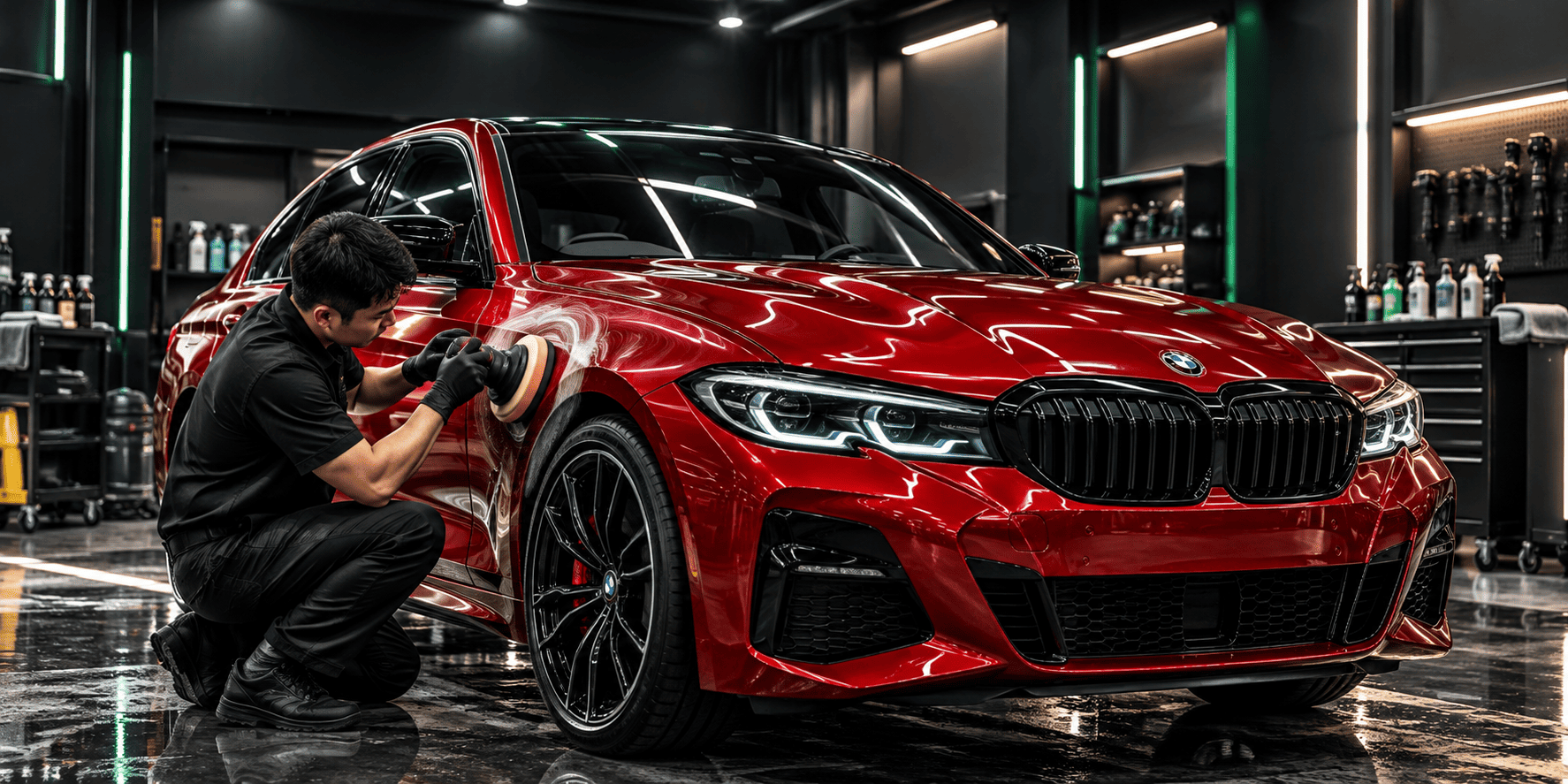
Paint Enhancement
Polishing can be considered when the surface requires correction or enhancement.
Surface Protection
Coating treatments can be used as part of a longer-term exterior protection strategy.
These aren’t identical services and shouldn’t be treated as interchangeable.
 When Should You Consider Professional Paint Protection?
If your vehicle regularly experiences:
- Outdoor parking
- Heavy rainfall
- Strong sunlight
- Urban pollution
- Long-distance driving
- Frequent road contamination
you may want to consider whether additional surface protection fits your vehicle-care goals.
Professional coating systems can be particularly relevant for owners who want a combination of gloss, water repellency, and easier maintenance.
Final Thoughts
Rain is a normal part of driving in Malaysia, but it shouldn’t be treated as a replacement for proper car care.
The water itself isn’t necessarily the biggest concern. The combination of rainwater, airborne contamination, road grime, and repeated drying is what can make exterior maintenance more challenging.
A simple approach works well:
Drive → expose the vehicle → inspect the surface → wash when needed → address stubborn contamination → consider protection when appropriate.
With the right maintenance routine, your vehicle can stay cleaner and its exterior can remain easier to care for throughout the year.
If you’re looking for additional protection against water, dirt, and environmental contamination, explore Supersaloon Autospa’s Polish & Coating services to learn more about the available treatments.