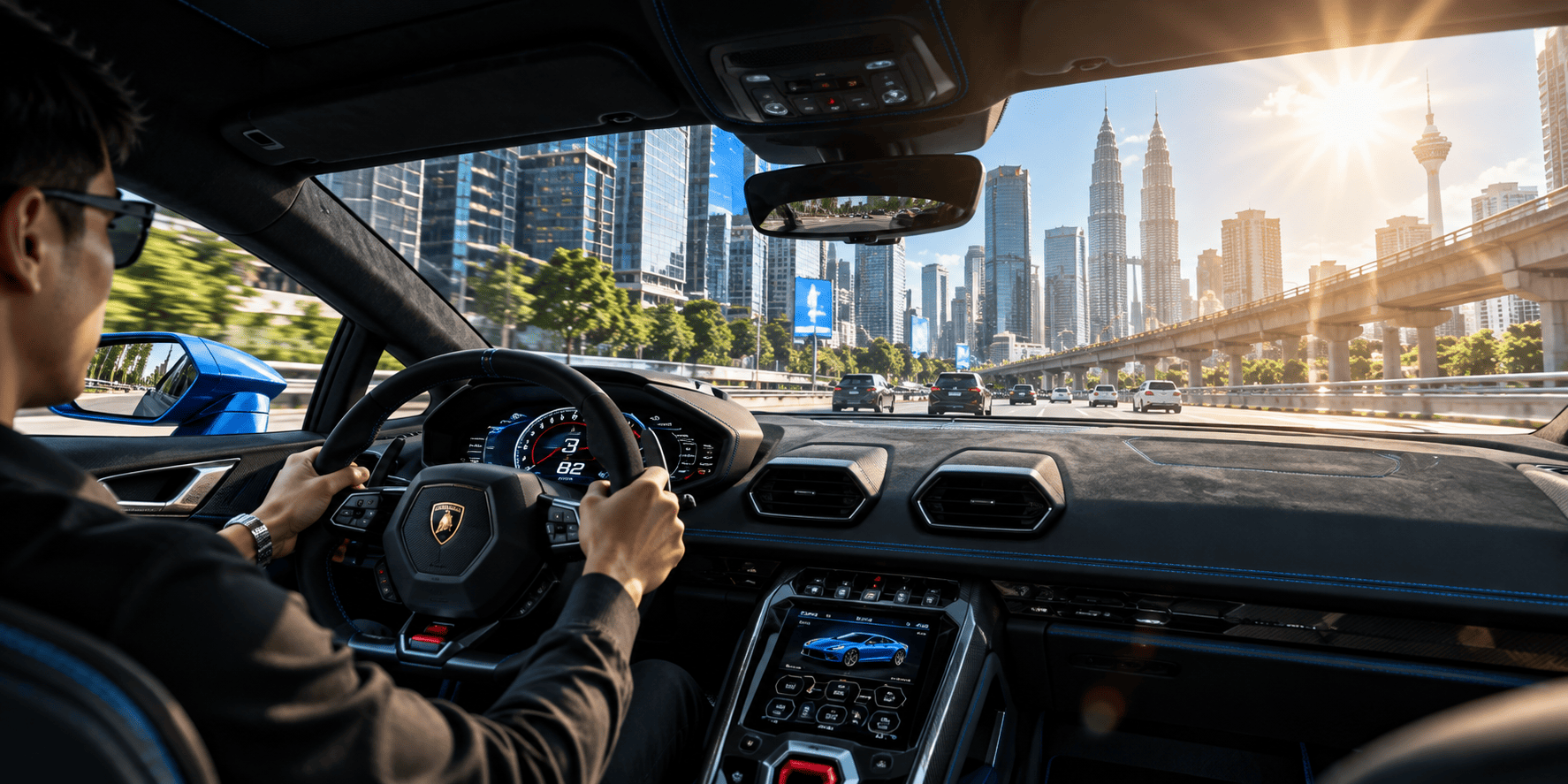
The steering wheel is hot, the seats feel uncomfortable, and the cabin temperature can become significantly higher than the conditions outside.
In a tropical climate like Malaysia, keeping your car comfortable isn’t only about air conditioning. Parking habits, ventilation, sun exposure, interior materials, and the vehicle’s windows can all influence how quickly the cabin heats up.
Fortunately, there are several practical ways to reduce heat buildup and make your car more comfortable throughout the day.
Why Does Your Car Get So Hot When Parked?
When a vehicle is parked in direct sunlight, sunlight enters through the windows and reaches the dashboard, seats, steering wheel, and other surfaces inside the cabin.
These surfaces absorb solar energy and gradually become hotter.
The result is a cabin that can feel much hotter than the surrounding outdoor environment.
This effect can be particularly noticeable in Malaysia because of the country’s warm temperatures, strong sunlight, and humid tropical climate.
1. Park in the Shade Whenever Possible
One of the simplest ways to reduce cabin heat is to reduce direct sunlight reaching the vehicle in the first place.
Whenever practical, choose:
- Covered parking
- Underground car parks
- Multi-storey parking areas
- Shaded parking spaces
- Parking areas protected from direct afternoon sunlight
Even partial shade can make a noticeable difference compared with leaving the vehicle under direct sunlight for several hours.
2. Use a Quality Windscreen Sunshade
If covered parking isn’t available, a windscreen sunshade can help reduce the amount of sunlight entering the cabin through the front windscreen.
The dashboard is particularly important because it is exposed to a large amount of sunlight through the windscreen.
A properly fitted reflective sunshade can help reduce direct solar exposure and keep some interior surfaces from becoming excessively hot.
For daily use, choose a sunshade that fits the windscreen properly rather than relying on a small universal cover that leaves large areas exposed.
3. Protect the Interior From Direct Sunlight
Heat doesn’t only affect how comfortable the cabin feels.
Repeated exposure to strong sunlight can also contribute to the aging of interior materials over time.
Dashboard surfaces, leather, synthetic leather, plastics, and other trim materials can all benefit from reduced exposure to direct sunlight.
Keeping the vehicle shaded whenever possible is therefore useful for both comfort and interior care.
4. Ventilate the Cabin Before Driving
When you return to a hot vehicle, turning the air conditioning to maximum immediately isn’t always the most efficient first step.
If it is safe to do so, opening the doors or windows briefly can help release some of the accumulated hot air before you begin driving.
Once the hottest air has escaped, close the windows and allow the air-conditioning system to cool the cabin.
Always consider your surroundings and personal safety before opening the vehicle.
5. Don’t Forget the Windows
The windows are one of the major surfaces through which sunlight enters a vehicle.
This is why automotive window film can be an important part of a broader cabin-comfort strategy.
Modern automotive films can be designed to help manage solar heat while also providing other benefits depending on the film technology selected.
If you’re considering professional window film for your vehicle, you can explore the different automotive tinting solutions available from Supersaloon Autospa.
The available options on the service page include different technologies and performance levels, allowing vehicle owners to consider their preferred balance of comfort, appearance, visibility, and protection.
6. Consider the Color and Material of Your Interior
The materials and colors inside your car can influence how heat is experienced.
Darker surfaces can become noticeably hot when exposed to direct sunlight.
This is particularly obvious with black leather seats and dark dashboards.
While changing the interior isn’t practical for most vehicle owners, protecting these surfaces from direct sunlight can help reduce unnecessary heat exposure.
7. Use Remote Start Carefully
Some modern vehicles provide remote-start functionality that allows the air conditioning system to begin operating before the driver enters the vehicle.
When available and appropriate for your vehicle, this can make entering a hot cabin more comfortable.
However, remote-start features should always be used according to the manufacturer’s instructions and local regulations.
8. Keep the Air-Conditioning System Maintained
Even the best parking habits won’t help much if the vehicle’s air-conditioning system isn’t performing properly.
If your car takes unusually long to cool down, consider having the system inspected.
Possible issues can involve components such as:
- Cabin air filters
- Air-conditioning refrigerant
- Cooling components
- Airflow restrictions
- Blower performance
Regular vehicle maintenance can help ensure that the cooling system is able to perform as intended.
9. Avoid Leaving Heat-Sensitive Items Inside
A hot vehicle can become an unsuitable environment for certain items.
Whenever possible, avoid leaving heat-sensitive belongings inside a parked car for extended periods.
This includes items such as:
- Electronic devices
- Medicines that require controlled storage conditions
- Pressurised containers
- Food and drinks that can spoil
- Other temperature-sensitive products
If something is sensitive to heat, taking it with you is generally safer than leaving it inside a hot vehicle.
 Does Window Tint Really Help With Cabin Heat?
Window film can play a role in managing solar heat entering the cabin, but not all films are designed or manufactured to provide the same level of performance.
Different technologies can have different characteristics, including their ability to reject infrared radiation, reduce ultraviolet exposure, maintain visibility, and alter the appearance of the glass.
This is why choosing a window film based purely on how dark it looks may not provide the result you expect.
For drivers interested in exploring professional automotive window tinting, Supersaloon Autospa’s Tinted service provides several options with different technologies and specifications.
Dark Tint Doesn’t Always Mean Better Heat Rejection
This is a common misconception among car owners.
A window film’s visible darkness and its heat-rejection performance are not necessarily the same thing.
Two films can look similar from outside while having different technical characteristics.
When evaluating automotive window film, it can therefore be useful to look beyond appearance and consider factors such as the technology used, heat-management performance, visibility, UV protection, and expected durability.
What Is the Best Combination for a Cooler Car?
There isn’t one solution that works equally well for every vehicle.
A practical approach is to combine several habits:
- Park under cover whenever possible.
- Use a properly fitted windscreen sunshade.
- Reduce direct sunlight exposure to the interior.
- Ventilate the cabin before driving when appropriate.
- Maintain the air-conditioning system.
- Consider suitable automotive window film.
Combining these measures can make a greater difference than relying on a single solution.
What Should You Look for in Automotive Window Film?
If you decide to install window film, don’t choose solely based on darkness or appearance.
Consider the characteristics that matter most to your driving environment.
These may include:
- Heat management
- UV protection
- Visibility
- Privacy
- Appearance
- Durability
- Warranty
The right combination will depend on the vehicle, the driver’s preferences, and how the car is used.
Final Thoughts
Keeping a car cool in Malaysia doesn’t have to depend entirely on turning the air conditioner to maximum.
Reducing direct sunlight, choosing better parking locations, protecting the interior, ventilating the cabin, and maintaining the air-conditioning system can all contribute to a more comfortable driving environment.
For vehicle owners who spend significant time driving or parking outdoors, automotive window film can also be considered as part of a broader approach to managing heat and sunlight inside the cabin.
If you’re interested in professional automotive window tinting, visit Supersaloon Autospa’s Tinted service to explore the available options and find a solution suited to your vehicle.